How Green Is Horticulture, Really? The Hidden Plastic Problem in Our Industry
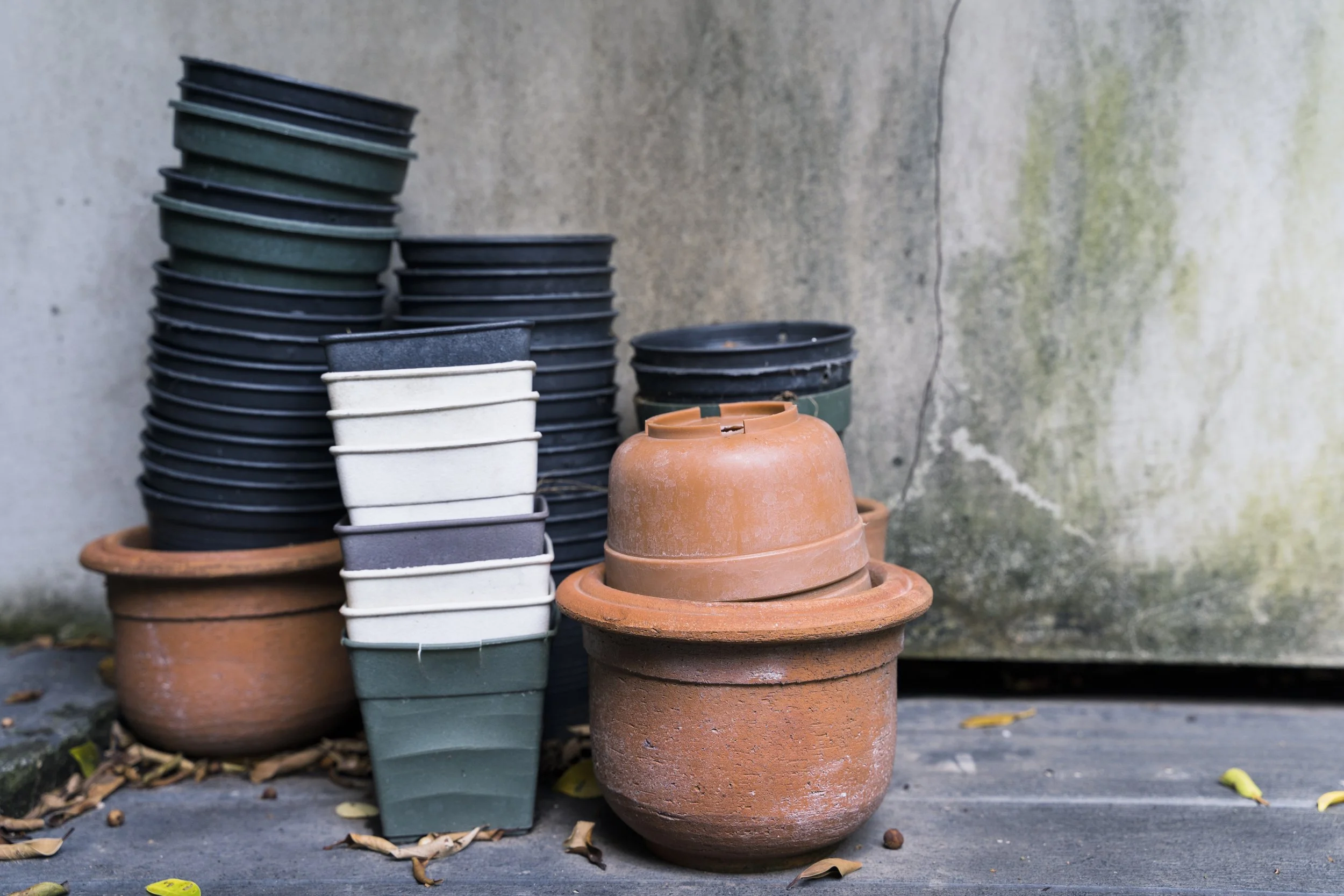
Behind every healthy plant, there’s often a hidden plastic footprint most of us never see. From propagation trays to compost bags and cable ties, plastic has become the backbone of modern gardening. But that convenience comes with a long-term cost — for our soil, ecosystems, and even our health.
The Scale of the Problem: Plastic in the UK Gardening Industry
Every year in the UK, the horticultural industry uses hundreds of millions of plastic pots, trays, and sleeves — and the vast majority can’t be recycled.
More than 500 million plant pots enter circulation annually. Many are made of black polypropylene, a plastic that recycling machines can’t detect, meaning most are sent straight to landfill or burned.
And it doesn’t stop there: Compost bags, plant labels, and cable ties pile up behind the scenes. Synthetic plastic lawns are still being laid in gardens nationwide — marketed as “low maintenance” but contributing nothing to biodiversity. Even plastic play bark is gaining popularity, slowly releasing microplastics into our soil and waterways.
The problem isn’t just visible waste — it’s what happens next.
Why This Matters: Microplastics in Soil, Plants, and People
In one word — microplastics.
As plastics degrade, they break down into microscopic particles that contaminate soil and water. Agricultural research shows that UK soils now contain up to 23 times more microplastics than oceans.
This pollution undermines soil structure, nutrient cycling, and the health of vital soil organisms such as worms and microbes. In lab studies, high microplastic levels have cut worm fertility by 50% — a devastating impact when you consider that earthworms are the engineers of healthy soil.
When microplastics enter the food chain (via crops, or through soil fauna eaten by birds and small mammals), they threaten the integrity of entire ecosystems. It’s not just an environmental issue — it’s a productivity issue.
If we’re using hundreds of plastic rubble bags, pots, and liners on each project, can we really call ourselves sustainable?
The Human Cost: What We Know So Far
The human health risks from microplastic exposure aren’t fully understood yet — but what we do know should make us stop and think. Microplastics have been detected in human lungs, blood, placenta, and even brain tissue. Estimates suggest the average adult now ingests or inhales between 70,000 and 120,000 microplastic particles per year! We don’t yet know the long-term effects — but it’s hard to imagine that increasing volumes of synthetic particles circulating in our bodies are harmless.
Are we slowly poisoning ourselves and the ecosystems that support us? I’m thinking yes.

Why This Is a Professional Issue
For professional gardeners and horticulturalists, this isn’t just an environmental problem anymore. It’s:
Operational – Single-use plastics add hidden costs, storage issues, and disposal challenges.
Reputational – Clients and specifiers increasingly expect visible sustainability in materials and methods.
Ethical – We have a duty of care to the soil and ecosystems we work with.
As professionals, we shape not just gardens, but values. Being plastic-aware deepens our sustainability position — and helps us leave something better behind for the next generation.
What We Can Do?
You don’t need to change everything overnight — but you can start here:
✅ Choose sustainable suppliers. Work with nurseries that use recyclable, reusable, or compostable materials.
✅ Promote awareness. Use your blog, newsletter, or social media to keep this issue visible. Conversations drive change.
✅ Join reuse and take-back schemes. Many garden centres and councils now collect used pots and trays for recycling or repurposing.
✅ Offer clients alternatives. Try fibre, coir, paper, or wood-based pots — or reusable trays made from recycled materials.
✅ Measure your use. Track how many bags, pots, and sleeves your business consumes. What gets measured, gets managed.
Every step counts.
Looking Ahead: Facing the “Gods of Polypropylene”
We’re not just building, planting and maintaining gardens — we are shaping ecosystems. This is why I believe as gardeners we are stewards of the land. We have a big responsibility and it’s definitely not an easy path to take but there is alot riding on this, we need to make changes and be brave.
If horticulture is to remain truly green, we must look beyond the plants, the customers, the margins, the pressures and face the Gods of Polypropylene. We need to take those Gods down a peg or two and go back to our roots, nature, natural, nurture.
It’s never too late to be the change you want to see in the world, always remember that.